
For safety officersSafety during dry ice blasting works.
- SCC
- certified
- ISO45001
- Occupational health and safety certified
- 0
- Solvents
- 6
- Points before every sign-off
Short answer
Before a dry ice deployment is signed off in the plant, the safety officer asks about gas, noise, and protective equipment. Here are the answers to forward.
As of November 2026
CO₂, noise, protection. The first questions.
CO₂ in enclosed spaces
Dry ice is solid carbon dioxide, a colourless, tasteless, and odourless gas naturally present in the atmosphere. In confined, poorly ventilated spaces, ventilation and measurement are required.
- Ventilation
- CO₂ is heavier than air and collects in low-lying areas. Ventilation and cordoning-off are defined in advance with the safety officer.
- Measurement
- Continuous residual oxygen measurement with a gas detector, CO₂ measurement upon completion.
Noise and hearing protection
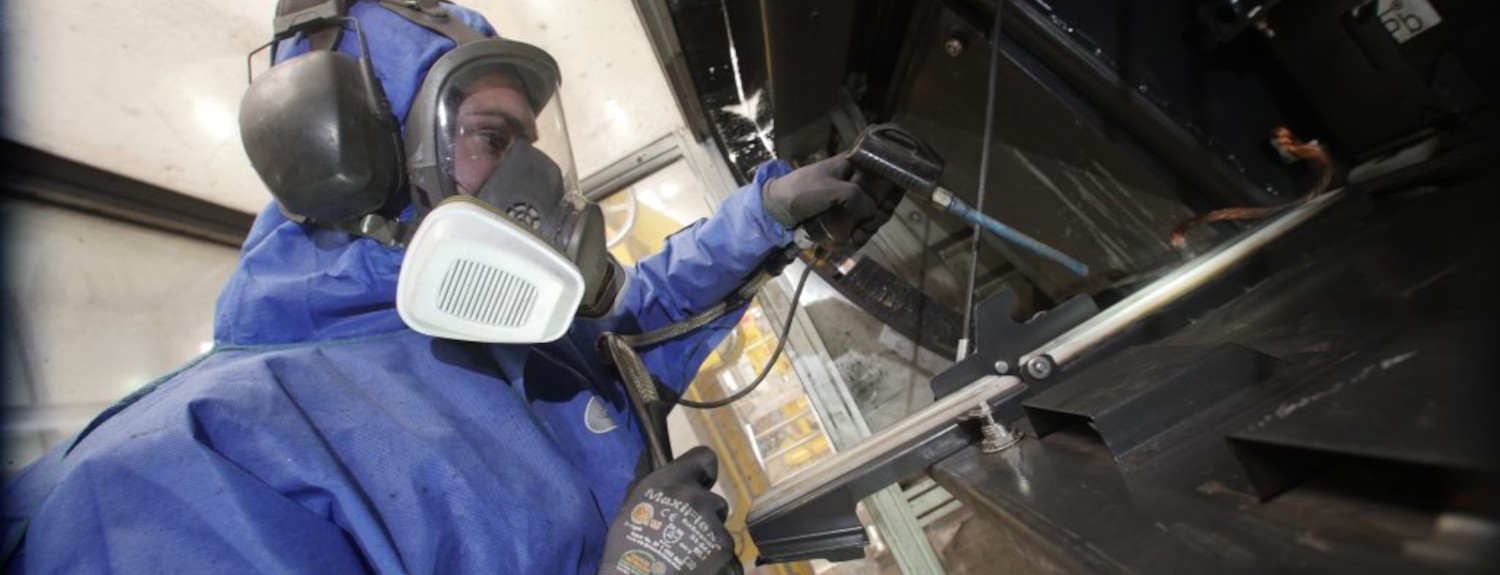
The jet is loud. The Egger PowAir team works in protective equipment with hearing protection.
- Noise level
- approx. 85 dB at 7 bar, approx. 95 dB at 10 bar compressed air
- Distance
- Particle flight approx. 3 to 5 m, the area is cordoned off
Explosion protection
In dusty areas, such as with wood or aluminium dust, the deployment is coordinated in advance with the safety officer.
- Ex zones
- Prior coordination, equipotential bonding against static charge is provided by the plant operator
Food, IFS, HACCP
Dry, without chemicals, and without secondary waste. According to Cold Jet, the process decontaminates surfaces. Proof of cleaning for the audit is documented.
- Verification
- Delivery note, countersigned daily, plus photographic documentation
Safer than angle grinders and solvents.
Conventionally, many workers use angle grinders inside the plant, close to residues and dust. Dry ice replaces this and works without hazardous solvents, scrapers, and chisels.
- No solvents, no chemicals, no hazardous waste from blasting media
- No water on electrical installations
- Blasted-off substances are enclosed and extracted
- Team with protective equipment, Egger PowAir is SCC-certified and certified to ISO 45001
Checklist for sign-off.
Egger PowAir clarifies these points with the plant operator prior to every deployment. Available as a PDF to forward to the safety officer.
- Room and ventilationSize, air exchange, CO₂ measurement
- Cordoning-off and noiseArea, hearing protection for third parties
- Power and plant statusongoing operation or standstill
- Dusts and explosion protectionZones, grounding, extraction
- Removed substancesToxic substance information, disposal
- Compressed air and setup locationCompressor on site or brought along