
Short answer
Not toxic, but with four hazards: cold, oxygen deficiency in confined spaces, compressed air, and noise. Below 15 vol.% oxygen, respiratory protection is required; from 85 dB(A), hearing protection. That is why professionals always work in pairs, with full protective equipment, ventilation, and continuous oxygen monitoring.
As of November 2026
Four hazards.
Cold
Dry ice is extremely cold. Bare skin can freeze to very cold surfaces; tearing free detaches the skin. Frostbite is often initially painless; severe pain only occurs during rewarming. Therefore, never touch it without hand protection.
Oxygen deficiency
Dry ice turns into CO₂ gas. Air normally contains around 21 vol.% oxygen. In confined, poorly ventilated spaces such as basements, containers, or silos, this proportion can drop. Below 15 vol.%, respiratory protection is necessary. Therefore, ventilation and continuous measurement are provided.
Compressed air
Compressed air is underestimated. As little as 820 mbar can damage an eye; 345 mbar in the mouth can rupture the oesophagus. Air blown under the skin can trigger a life-threatening embolism. Nobody stays within the blasting jet; clothing or skin are never cleaned with compressed air.
Noise and dust
Compressed air tools reach 110 to 140 dB(A). From 85 dB(A) upwards, there is a risk of insidious, irreversible hearing loss. Blasted residues are partly pulverised and remain suspended in the air. Therefore: hearing protection, respiratory protection, enclosure, and extraction.
The Protective equipment.
| Equipment | Protects against |
|---|---|
| Full-vision goggles, heat-resistant up to 130 °C | Impacts, liquids, dust |
| Earplugs and ear defenders | Noise at high volume levels |
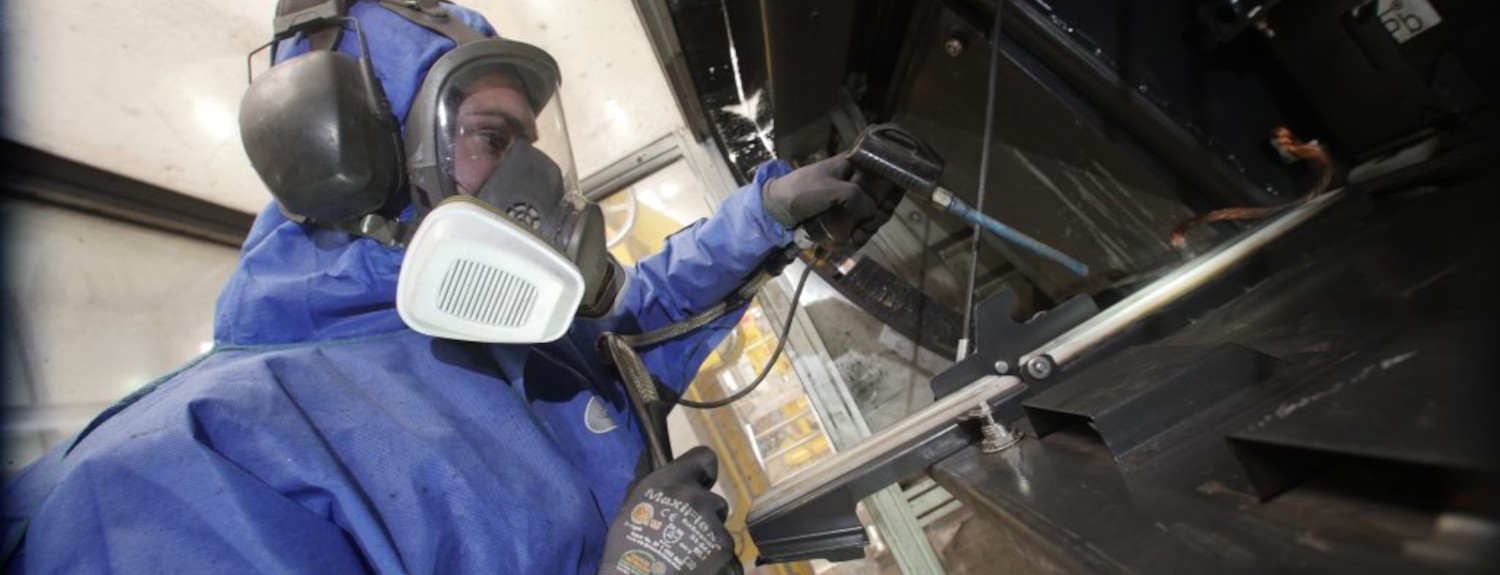
| Silicone full-face mask with P3 fine dust filter | Dust-laden air |
| Half-mask with gas and particulate filter | Gases, vapours, and particulates |
| Particle-tight chemical protective coverall | Low-toxicity chemicals, resins, dust |
| Gloves and S3 safety boots | Cold, cuts, falling parts |
| Eyewash bottle | First aid for foreign bodies in the eye |
Rules in operation.
- Before startingAssess dust generation: which blasting media, which protective equipment, how to enclose, extract, and filter?
- VentilationEnsure adequate aeration and ventilation; measure residual oxygen in confined spaces using a gas detector.
- In operationAlways in pairs: one person cleans, one secures. Never remain in the compressed air jet.
- InstructionRecurring annually, based on the safety data sheet for solid carbon dioxide. Hearing examination prior to commencing work and every five years thereafter.
Frequently asked questions.
Is dry ice toxic?
Dry ice is solid carbon dioxide. The hazard is not toxicity, but displacement: in poorly ventilated spaces, CO₂ can displace oxygen. Therefore, ventilation and measurement are carried out.
Can you touch dry ice?
Not with bare skin. With very cold surfaces, skin can freeze fast; frostbite is often only felt upon rewarming. Always wear hand protection.
How loud is dry ice blasting?
Depending on pressure, around 85 dB at 7 bar and around 95 dB at 10 bar. For third parties in the vicinity, the area is cordoned off and hearing protection is provided.
Who is liable if something happens?
Egger PowAir is covered by commercial third-party liability insurance of 10 million euros per project and is certified according to SCC.