
Fire restorationCan roof trusses be cleaned with dry ice?
Short answer
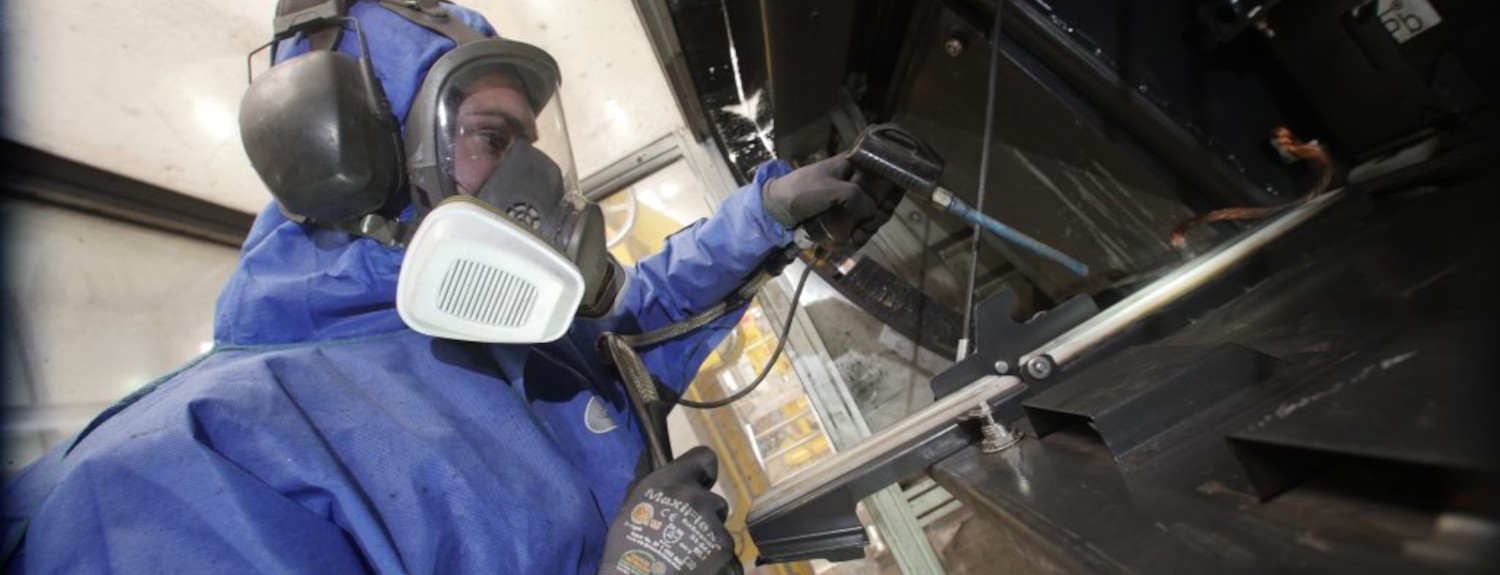
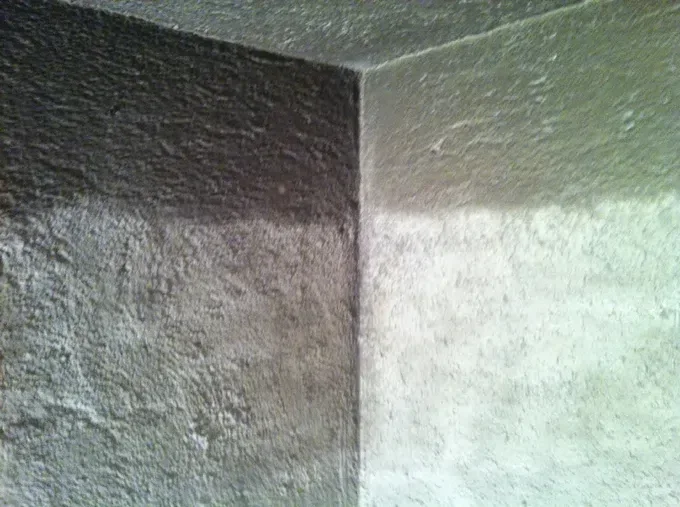
Yes. Soot, smoke damage and charring can also be removed in the tight angles of roof trusses, around nails, cables and pipes, without damaging the timber surface. The burnt smell is usually no longer detectable 24 hours after blasting.
As of November 2026
Suitability for wood.
A fire leaves soot, smoke damage and charring on timber, brickwork, concrete and metal. Conventional methods involve sanding, scraping or using wire brushes. Dry ice replaces this lengthy process.
It removes smoke, soot, vaporised synthetic resins and charcoal. Since it sublimates completely, no Secondary waste secondary waste is produced, unlike with soda, water or sand. After cleaning, nothing additional needs to be removed.
Procedure on site.
- Site inspectionClarifying damage, access and timeframe.
- EnclosureBlasted-off material is captured and extracted using industrial vacuum cleaners.
- BlastingBeams, formwork and angles, around nails, cables and pipes.
- AcceptanceOnly the removed material is disposed of.
Limitations of the process.
Where the process reaches its limits is stated here before you make an enquiry. Described by the technical department at Egger PowAir.
- Soft woods can only be blasted without damage under certain conditions. For this reason, a test area is prepared on the beam in advance.
- CO₂ accumulates in low-lying areas. In the roof space, ventilation is provided, residual oxygen is continuously measured and CO₂ levels are checked at the end.
- The area is cordoned off or enclosed; particles travel about 3 to 5 metres.
Project from the region.
Frequently asked questions.
Does it still smell of fire after cleaning?
The odour is eliminated or significantly reduced. Typically, it is no longer detectable 24 hours after blasting; encapsulation is required far less frequently.
Is post-cleaning required afterwards?
No. The dry ice sublimates; no blasting media remains. Only the removed soot is disposed of.
How much does it cost to clean roof trusses?
Billing is based on an all-inclusive hourly rate per team of two technicians, including travel to and from the site, dry ice, equipment and protective gear, with a minimum of 8 hours. Net, plus VAT. The exact scope is determined after the site inspection.