
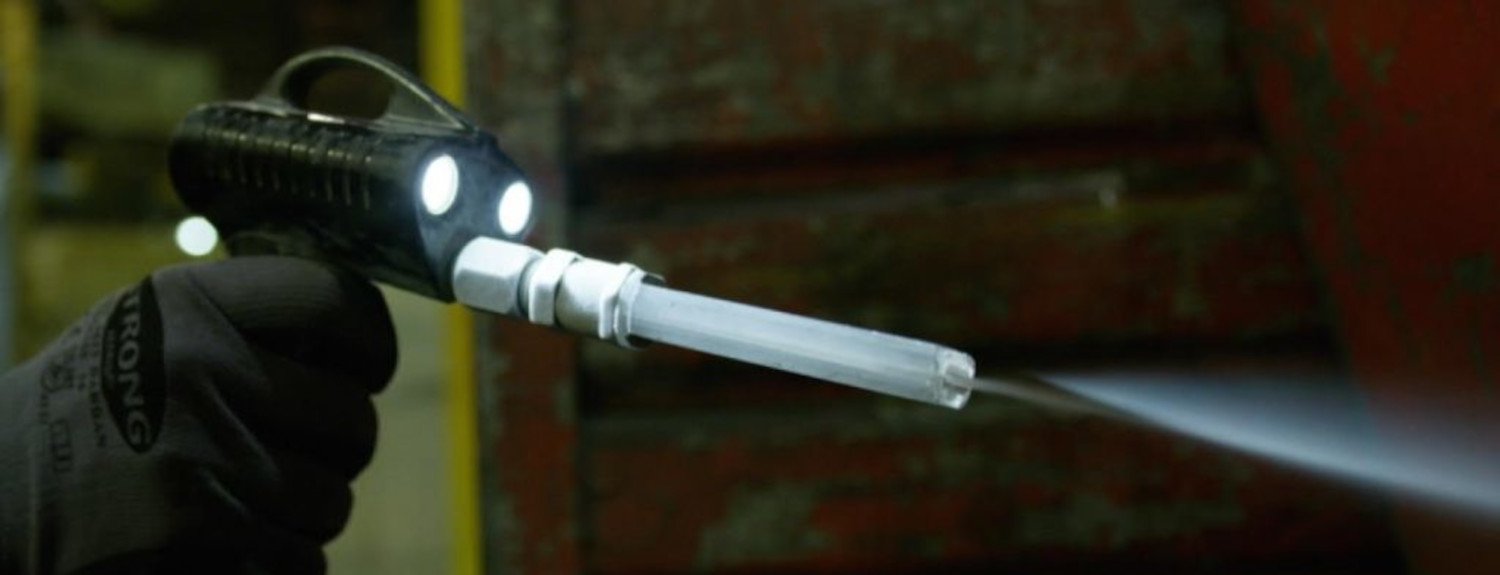
- −78,5°C
- Temperature of the dry ice
- 3mm
- Diameter of the pellets
- 1 : 760
- Expansion during vaporisation
- 0%
- Water, chemicals, blasting media residues
Short answer
Dry ice pellets at minus 78 degrees are blown onto the surface with compressed air. The thermal shock makes the dirt layer brittle, the incoming ice vaporises in the cracks, expands by a factor of 760 and blasts the dirt off.
As of November 2026
Four steps, one second.
What happens between nozzle and surface: Thermal shock, Microcracks, Sublimation and volume expansion. Select a step or let it run.
Pellets or snow?
Pellets, 3 mm
Mass and density for fast, thorough cleaning. From heavy-duty cases, such as 3 cm of bitumen on a tank or underbody coating on a car, right through to production facilities.
- Blasting pressure
- approx. 7 to 10 bar, compressors up to 24 bar
- Typical for
- Boilers, presses, moulds, fire remediation
Dry ice snow
Finest form for sensitive surfaces and precision cleaning. Gentle enough to clean a 15th-century manuscript or the shell of a raw egg.
- Blasting pressure
- infinitely variable down to 0.1 bar
- Typical for
- Medical devices, electronics, restoration
Equipment, compressed air, ice.
For years, Egger PowAir has exclusively deployed machines and equipment from the world market leader Cold Jet . Carbon dioxide occurs as a by-product of industry and is cooled to minus 78.48 °C until it solidifies like conventional ice.
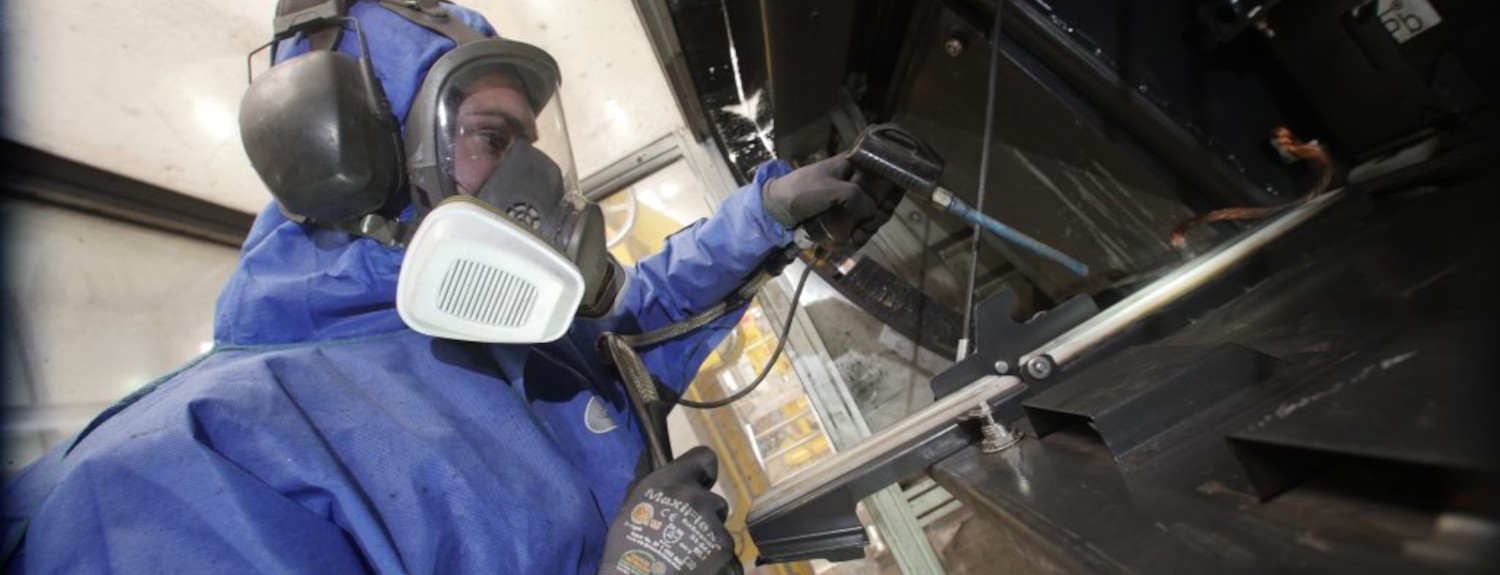
- Compressed air, is a dedicated compressor required?
- No, Egger PowAir brings its own compressors
- Dry ice consumption per blasting hour
- up to approx. 80 kg, calculation estimate by Egger PowAir
- Area per hour, depending on contamination
- e.g. approx. 4 m² in cases of heavy contamination
- Where does the dry ice come from?
- Delivered fresh for the scheduled appointment, remaining material is collected by the supplier
- During ongoing operation, including on hot tools
- possible
Frequently asked questions.
Why is it called dry ice?
Because evaporation produces no liquid, not a single drop, no water. Dry ice exists only in solid or gaseous form.
Does condensation remain on the equipment?
The dry ice itself leaves behind 0% water.
Does the system need to be dismantled?
Usually not. Cleaning is carried out on site, often without disassembly, with minimal downtime or even during full ongoing operation.
Is dry ice blasting abrasive?
No. The process is non-abrasive and does not damage tools, in contrast to micro-sandblasting, for example.